
2 Oct 2026
FUE vs FUT Hair Transplant: Donor Scars, Coverage and Recovery
Compare the donor approach, scarring and planning questions before choosing a hair transplant.
Read guide →Hair transplant in Islamabad & Rawalpindi at Luxeria Clinic delivers permanent, natural-looking follicular restoration utilizing advanced micro-surgical extraction and precision implantation techniques. Progressive androgenetic alopecia, receding frontal hairlines, thinning crowns, and patchy scalp loss frequently erode self-confidence and leave individuals frustrated by temporary topical solutions, concealers, or synthetic hairpieces.
Unlike surface medications that only slow shedding while actively used, modern follicular transplantation relocates your own living, genetically DHT-resistant hair follicles directly into balding or thinning scalp zones.
At Luxeria Clinic, our board-certified hair restoration surgeons meticulously design age-appropriate hairlines, natural whorl patterns, and authentic growth angles. We offer patients across Islamabad and Rawalpindi dense, permanent, and completely natural hair coverage tailored to complement their unique facial proportions.
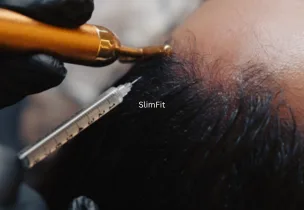
Understanding how a clinical hair transplant in Islamabad & Rawalpindi works involves examining the specialized Follicular Unit Extraction (FUE), Diamond FUE, and Direct Hair Implantation (DHI) protocols refined for minimal tissue trauma.
During your private diagnostic consultation at Luxeria Clinic, our restoration specialists evaluate your occipital donor scalp reserve, hair shaft caliber, scalp laxity, and pattern of hair loss under digital trichoscopy.
Once gentle local anesthesia ensures complete comfort throughout the procedure, individual follicular units containing one to four hairs are harvested from the back and sides of the scalp using ultra-fine micro-punches.
Each viable graft is preserved in a chilled, nutrient-rich holding solution before being implanted into recipient sites using sapphire micro-blades or Choi implanter pens. By matching exact natural growth angles, exit directions, and dermal depths, our surgeons ensure maximum graft survival and seamless blending with existing native strands.
Opting for a clinical hair transplant in Islamabad & Rawalpindi resolves hereditary pattern baldness, temple recession, and traumatic scalp hair loss across the Twin Cities.
Restoring living follicular units creates permanent density that grows, washes, and styles naturally for life.
The surgeon reviews medical history, current medicines, scalp health and the pattern of loss. The available donor supply limits the plan. Smoking, previous surgery and ongoing loss may affect preparation and whether transplantation should proceed.
The surgical plan maps the donor area and the intended distribution of grafts. After appropriate anaesthesia and preparation, follicles are harvested, handled and placed according to the chosen method. Hairline design and natural growth direction are part of the plan, not an afterthought.
Follow the washing and activity instructions that protect the donor and recipient sites. Avoid scratching or disturbing new grafts. The team defines the review schedule and the signs of infection or another problem that require earlier assessment.
Following your hair transplant in Islamabad & Rawalpindi, tiny pinpoint crusts form around each newly implanted graft and shed naturally within 7 to 10 days.
Mild initial forehead swelling or light donor soreness typically settles within 3 to 5 days, enabling most desk-based patients to return to office work within a few days.
Transplanted shafts undergo a normal temporary shedding phase between weeks 3 and 4 before entering active follicular regeneration. Permanent new hair growth emerges around 3 to 4 months post-procedure, reaching full thickness, texture, and maturity between 9 and 12 months.
Once fully established, transplanted hairs grow permanently and require only standard haircuts, gentle washing, and optional dermatologist-guided medical maintenance to protect surrounding native hair.
Undergoing a hair transplant in Islamabad & Rawalpindi at Luxeria Clinic is a safe, minimally invasive outpatient surgical procedure performed under strict sterile clinical protocols.
Our experienced surgical team uses single-use micro-instruments and optical magnification to safeguard surrounding native follicles, nerves, and scalp blood supply.
The total financial investment for a hair transplant in Islamabad & Rawalpindi at Luxeria Clinic is customized based on individual anatomical requirements rather than a rigid flat rate.
Pricing considerations depend on the total number of follicular grafts required—ranging from minor hairline refinement (1,500 to 2,000 grafts) to extensive full-scalp restoration (3,500 to 4,500+ grafts)—alongside the chosen FUE, Diamond FUE, or DHI surgical technique.
During your private consultation in Islamabad, our specialists map your target coverage zones, calculate exact graft counts, and provide a transparent cost breakdown before scheduling.
We prioritize ethical medical planning, natural aesthetics, and lasting value for your hair restoration investment..
Call +92 301 1111110 for the current price or use the consultation form to send your treatment enquiry.
Treatment-specific case photos will be added with consent. Individual outcomes vary.
Explore our clinic gallery and consultant profiles while treatment-specific stories are prepared. Discuss the limits of any result at your own consultation.
Explore clinic galleryLuxeria Clinic brings skin, hair, aesthetic and surgical consultation routes together, so the service can be matched to the concern you want to address. Our treatment directory makes it easier to compare related options before choosing an appointment.
You can view consultant profiles, share previous treatment details and arrange your visit directly with the team. Your consultation covers the proposed method, expected change and care plan before you decide to proceed.
Hair transplantation moves living hair follicles from a suitable donor area to an area with reduced coverage. Donor hair is limited and should be preserved for future needs.
Hair transplantation commonly uses local anaesthesia, with the anaesthetic approach selected by the surgical team. Tenderness, swelling and wound discomfort can occur during recovery.
Coverage may be achieved in one planned procedure or need staging. The surgical team determines this from donor capacity, the area and the long-term hair-loss strategy.
Recovery depends on the specific method and extent of treatment. Follow the washing and activity instructions that protect the donor and recipient sites. Your care instructions define when work, exercise and usual products can resume.
Successfully transplanted donor follicles can provide long-term growth, but the appearance can change as native hair continues to thin. Donor planning and ongoing hair-loss care remain important.
Yes, you can contact Luxeria Clinic for an appointment enquiry. Our Islamabad address is 1st floor, building 4A, Rana Market, Sector F-7/2. The team confirms the service, consultant and Rawalpindi appointment details before your visit.
The current quote depends on the treatment area, chosen method, products and planned sessions. A displayed starting price applies to its stated scope; confirm the total and included follow-up before proceeding.
Donor hair is limited and should be preserved for future needs. Transplantation does not stop every form of ongoing hair loss, and diffuse or inflammatory loss may need medical treatment first.
Hair TransplantFUE hair transplantation removes individual follicular units from a donor area using small punches.
Explore treatmentHair TransplantFUT, or strip harvesting, removes a narrow strip of hair-bearing scalp from a suitable donor area.
Explore treatmentHair TransplantRobotic hair transplantation uses a robotic system to assist selected stages of a transplant, depending on the device.
Explore treatmentHair TransplantA beard transplant moves suitable donor follicles into selected facial areas to improve coverage, fill a patch or reconstruct an appropriate scarred area..
Explore treatmentHair TransplantEyebrow transplantation places donor follicles into a planned brow shape when thinning, injury or another assessed cause has reduced coverage..
Explore treatmentHair TransplantHair transplantation for women may be suitable for selected stable patterns of hair loss or areas needing reconstruction.
Explore treatmentHair TransplantDHI describes an implantation approach in which a specialised tool places prepared hair grafts into recipient areas.
Explore treatmentHair TransplantDiamond FUE is a technique label that can describe the tool used for part of an FUE procedure.
Explore treatmentHair TransplantA hybrid hair transplant combines defined surgical techniques within one donor and recipient plan.
Explore treatmentHair TransplantNo-shave FUE aims to reduce visible shaving during a follicular-unit extraction procedure.
Explore treatmentHair TransplantSapphire FUE generally refers to using sapphire blades for recipient-site creation within an FUE transplant.
Explore treatmentContact Luxeria Clinic to arrange an assessment and discuss the treatment options for your concern. Visit us at 1st floor, building 4A, Rana Market, Sector F-7/2, Islamabad, or contact the team for Rawalpindi appointment details.
Read practical guides to assessment, treatment options and aftercare.
Compare the donor approach, scarring and planning questions before choosing a hair transplant.
Read guide →